Databricks Data Intelligence Platform
Unified Data, Analytics & AI for the Energy Industry
Databricks provides a unified foundation for data engineering, governance, analytics and artificial intelligence. As a Databricks partner, we bring specialized industry knowledge to help organizations explore modern data architectures, integrate complex industrial and subsurface datasets and develop data-driven capabilities.

Databricks Partner
Lakehouse & Data Engineering
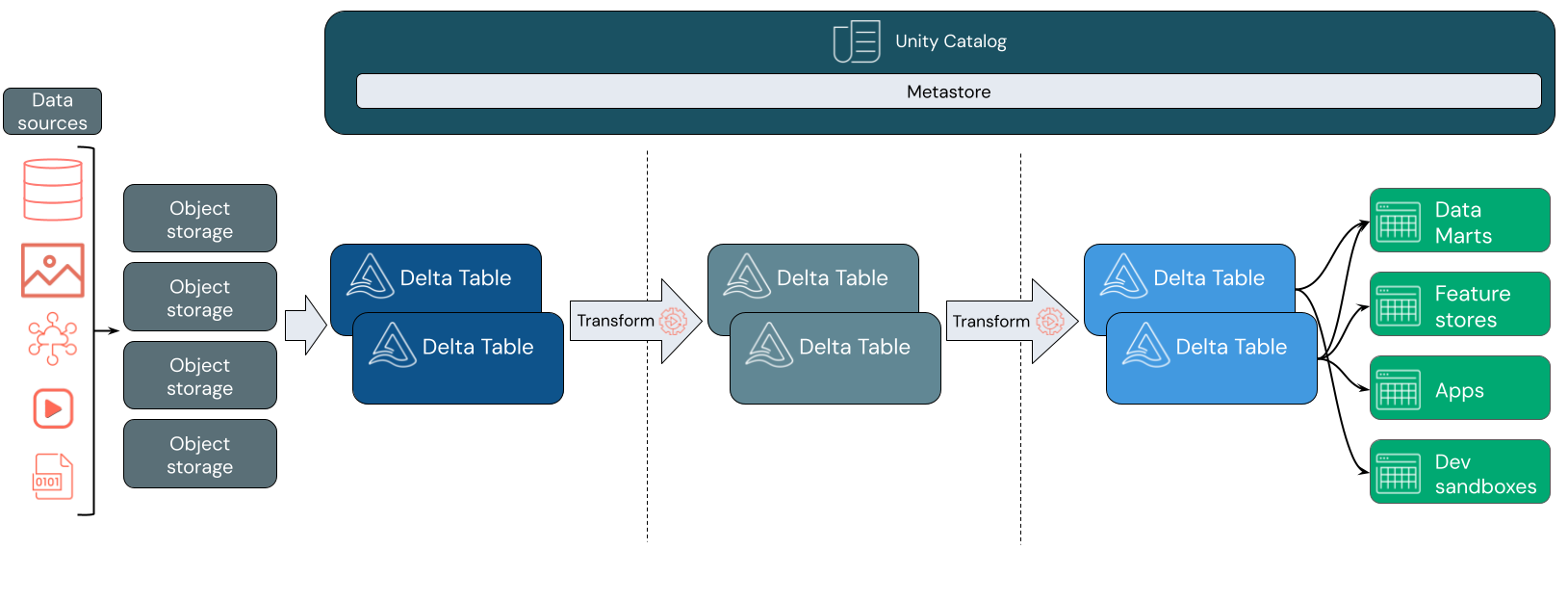
The Databricks lakehouse brings data engineering and analytics together on a shared data foundation. Delta Lake adds transactional reliability and schema enforcement to data lakes, supporting dependable batch and streaming workflows.
Ingestion, transformation and scalable processing can connect multiple data sources and prepare information for downstream analysis. Architecture choices depend on source systems, data quality, operating requirements and the organization's cloud environment.
Governance & Unity Catalog
Unity Catalog provides centralized governance for data and AI assets in Databricks. Access control, asset discovery and lineage help teams understand what information is available, who can use it and how it moves through analytical workflows.
An industrial governance design must also account for source-system permissions, sensitive information and organizational policies. Platform governance is a foundation for these controls, not a substitute for domain-specific decisions.
Analytics & Artificial Intelligence
Databricks SQL supports SQL analytics on lakehouse data. Machine learning tooling supports model development and lifecycle management, while Mosaic AI provides capabilities for building, evaluating and deploying AI applications, including generative AI.
For energy-industry applications, reliable data preparation, domain expertise and appropriate evaluation remain essential. These are platform capabilities and potential application areas, not claims of deployments we have completed or customer outcomes.
Industrial & Subsurface Data Integration
Scientific, operational and enterprise data can be brought into shared analytical workflows through domain-aware ingestion, transformation and metadata mapping. Potential applications include connecting geoscience information with operational and business datasets.
OSDU-aligned interoperability scenarios require deliberate integration with the relevant services, data models and access policies. Specialized subsurface formats may need dedicated parsers, connectors or conversion workflows; Databricks does not natively support every scientific format. OSDU alignment here describes an architectural approach, not a certification.
Discuss your data and AI foundations.
Speak with one of our specialists about your industrial data architecture and technical requirements.